Tindegruppa manages and operates the climbing wall at Øya/Helgasetr. The facility features a larger climbing wall and a smaller bouldering wall.
Equipment:
- The wall is equipped with quickdraws and a screwgate and two carabiners for the top anchor.
- The bouldering wall is equipped with boulder problems at various levels.
- It is required that individual climbers have their own personal equipment such as shoes, harness, rope and belay device.
The difficulty level of the routes ranges from 4 to 8 (Norwegian grade), with emphasis on routes in the six and seven range. The routes are color coded and usually follow only one row of bolts. Some competition routes can cross several bolts. There is a whiteboard on the back wall that lists all routes and their respective difficulty.
At Helgastr you are welcome at every level as long as you can properly secure yourself and have a Brattkort (Norwegian climbing card)! If you are an exchange student(or any other student) and you know how to belay, but you do not have a Brattkort, you can send a message to Tindegruppa on Facebook, and we can arrange a Brattkort test(belay test) for you.
Errors or deficiencies on the wall are reported to Helgasetr staff.
Beginner courses
Tindegruppa strongly recommends that you take a climbing course before you start climbing. It is also possible to train friends on their own, but there are some things to keep in mind.
If you need to start now, we recommend that both beginner and “teacher” follow our little tutorial
The most important thing about training a beginner is that they learn correctly and are taught correct belay methods. It is therefore important to practice this before you start climbing.
First of all, explain what kind of equipment is used, which knots we use and why we do what we do. Explain how the harness works and what functions it has.
Training Handbook
1. The experienced climber should hang the rope in the first quickdraw to help provide a better understanding of what goes up and down.
2. Demonstration of correct belay technique. Always keeping one hand on the ‘brake’ end of the rope is most important!
3. The beginner will try to belay while the more experienced climber pulls the rope. Pull the rope both ways. This will help the belayer learn lead climbing and top rope.
4. Practice lowering the climber.
5. If everything goes well and everyone feels safe, you can start climbing. There must be THREE Climbers present, since the experienced climber shall have direct supervision for the safety of the climber without a Brattkort. This means one experienced climber shall stand on the ground next to the inexperience belayer and hold the brake end of the rope while the climber is on belay. Thus, there must be two climbers with Brattkorts present in order for one beginner to be able to secure / belay.
6. Climb to the first or second bolt and hang on the rope. This will provide a sense of what forces are acting on the system.
7. Climb to the top and hang from the top anchor.
8. Furthermore, we refer to the statement of responsibility and provisions for NKF’s Brattkort, which all parties must be made aware of.
If you have any questions, please contact the Helgasetr Manager: sander.grimstad@ntnui.no, or send a message to Tindegruppa on Facebook.
Safety Rules at Helgasetr
A Brattkort is required to climb at Helgasetr
The following rules are not debatable and should always be followed.
Generally:
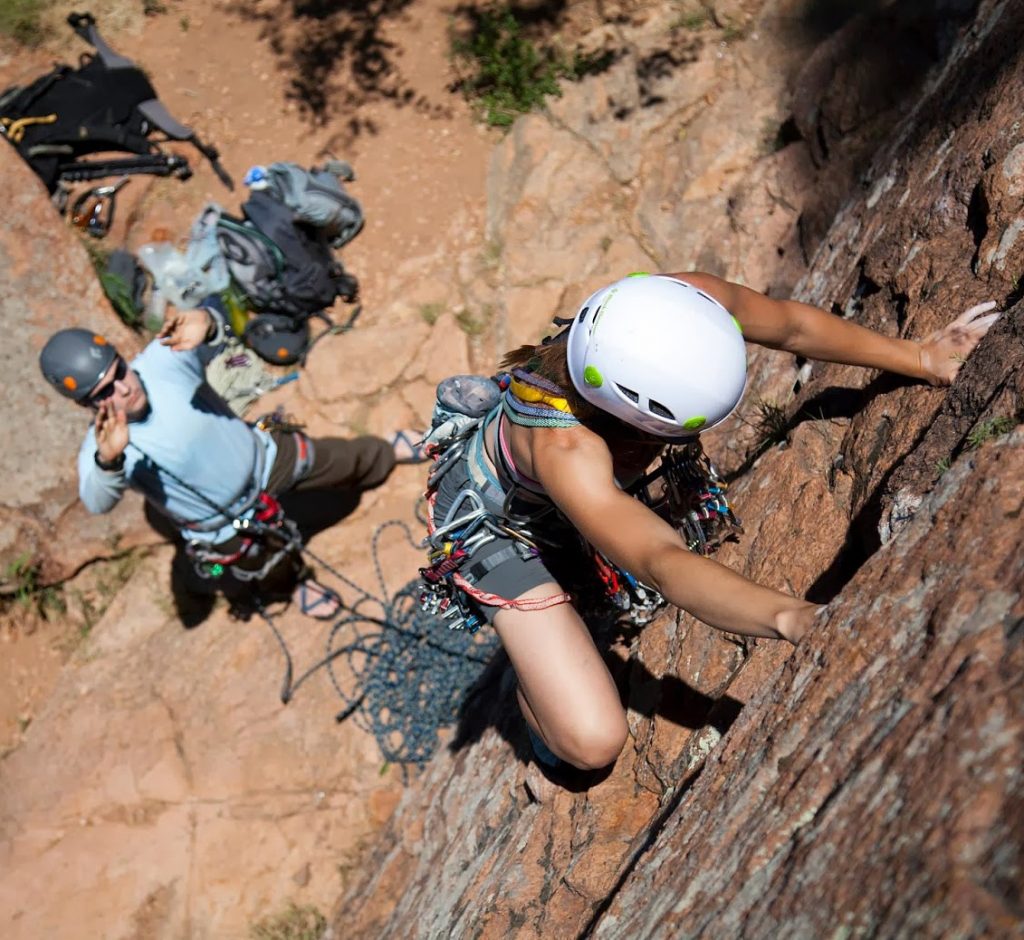
Beginners should always be accompanied by an experienced climber with a Brattkort.
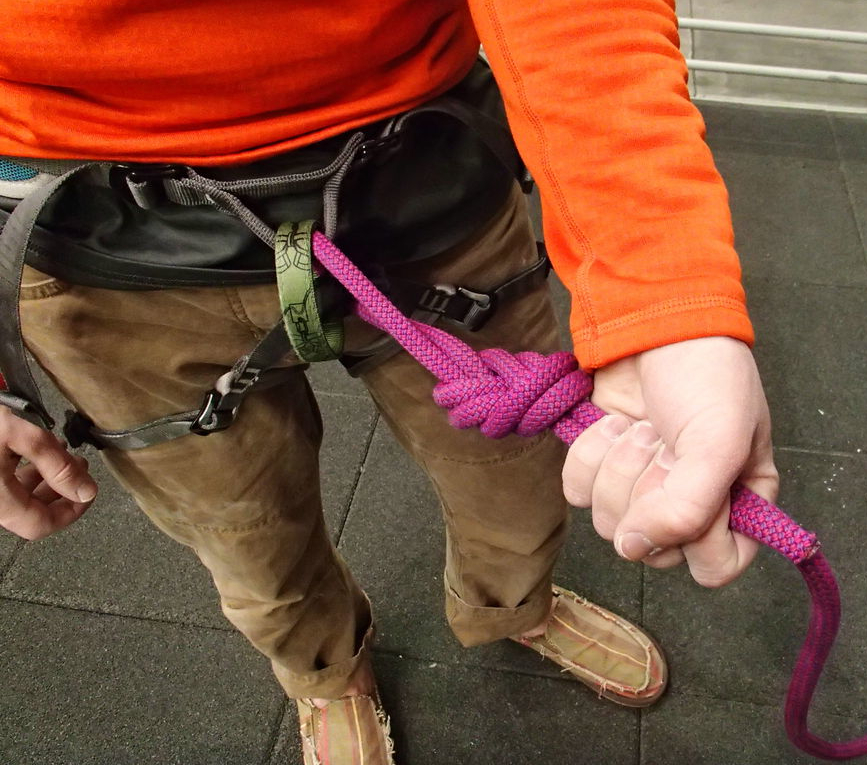
A figure-eight knot should always be used for tying-in and should be threaded through both tie-in points on the harness.
The carabiner for the belay device should only be clipped to the belay loop.
When using a belay device (tube device, ATC, Grigri etc.) there should always be a closed hand on the brake side of the rope.
With top rope, the guiding hand must be changed with the braking hand every time, i.e. a closed hand around the brake end of the rope at all times. (see above)
When belaying a lead climber the rope can have some slack in it between clips.
When lead climbing, all intermediate quickdraws should be clipped.
When climbing on top rope, both top anchors must be clipped in.
If top roping on the overhanging walls, the rope of the climber must be clipped into at least one quickdraw on the way down so that the climber does not swing out into the room in case of a fall.
Route setting
Are you interested in setting your own route on Helgasetr? Anyone can try route setting and can receive some compensation the job. Contact the Helgasetr manager.